

Article: Which cat litter is best?
Which cat litter is best?
The question "what is the best cat litter?" doesn't have one answer – the best litter depends on the cat, the litter box and the household. Here we go over the main types of cat litter, the pros and cons of each, what suits whom and how you make the bag last. At the end we answer the most common questions we get in the store at Nýbýlavegur.
What matters most?
- Litter:Sand that forms solid clumps around urine is the easiest to maintain – you remove the clumps daily and change all the sand less frequently.
- Odor Control:The ammonia smell that many associate with litter boxes comes from urine sitting in the litter. Good litter traps it or breaks it down.
- Vacuum:A lot of dust gets into your cat's respiratory system (and yours) and settles on everything around. This is especially important for kittens and cats with asthma.
- Texture under fleas:Most cats prefer fine-grained, soft sand. Coarse clumps scare some cats away from the litter box.
- Weight and disposal:Clay-based litter is heavy and all goes in the trash; plant-based litter is light and the bag is much easier to handle.
- Price per month – not the price per bag. Litter that clumps well and lasts longer can be cheaper to use even if the bag costs more.
Main Types of Cat Litter
Bentonite (clay sand)
The most common litter in the world. Clumps very well and is relatively inexpensive. The downsides are the weight (a 10 L bag can weigh 8–10 kg), the dust that comes with most types, that it all goes in the trash, and that it's mined. Well suited for those who want hard clumps and a low bag price.
Silica (crystals)
Absorbs urine without clumping; the urine evaporates from the crystals while the feces is scooped. Very lightweight and odor control is good initially, but the litter becomes saturated in 2–4 weeks and then needs to be completely replaced. Some cats dislike the hard, sharp crystals.
Plant-based – tofu, corn, wheat
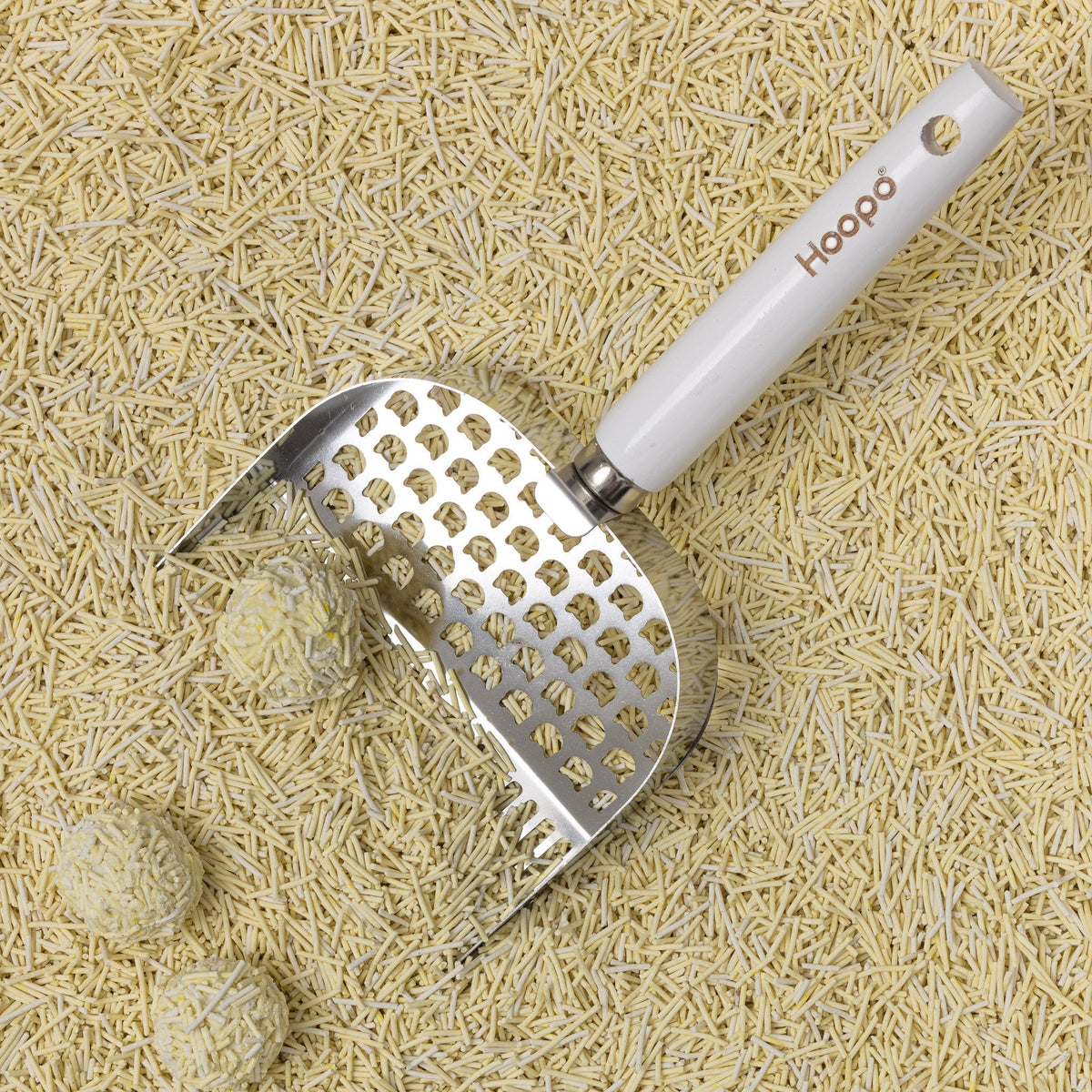
Clumping litter made from plant fibers. Tofu litter is made from leftover soy fibers and is the plant-based litter that has gained the most popularity in recent years. It's lightweight (a 17 L bag weighs about 6 kg), low-dust, clumps well, and has minimal odor. The manufacturer says the clumps can be flushed in small amounts, but we don't recommend it – they're best disposed of in the trash. The bag costs more than clay litter but usually lasts longer because the litter absorbs many times its own weight.
Wood shavings and paper
Eco-friendly and low-dust but clumps little or not at all; the clumps dissolve into sawdust when they get wet and all the sand is replaced regularly. Odor control is average. A good option for those who are allergic to dust but don't want plant-based litter.
What suits whom?
- Kittens: Fíngerður, ryklítill og óilmandi sandur (t.d. tofu „fine“). Kettlingar smakka gjarnan á sandinum – plöntusandur er þar öruggari en leir eða silica.
- Cats with sensitive respiratory systems or asthma:Avoid dusty clay litter; choose tofu, paper or dust-free wood.
- Automatic litter box:They need litter that clumps quickly and reliably. Tofu litter and good clay litter work; silica and wood pellets usually don't.
- More than one cat:Odor control is everything – clumping litter, clumps removed daily, and one box per cat plus one.
- Small apartment / cage indoors:Dust-free litter that tracks minimally outside the box. Fine-grained litter tracks less than coarse, and a mat in front of the box helps a lot.
- Want to get rid of heavy bags and trash bags:Tofu – 17 L bag is 6 kg and leaves little waste.
What cat litter does Móri sell – and why?
We made the decision to sell one type and do it well: tofu cat litter from Hoopo. We chose it because it combines what our customers ask for most: good clumping, low dust, low odor, and a lightweight bag. If you want traditional clay litter or silica, you'll find it many other places; we stick to what we recommend ourselves.
Hoopo Tofu is available in four versions and two sizes (7 L / 2.5 kg and 17 L / 6 kg):
| Version | Grain size | Ilmur | Best suited |
|---|---|---|---|
| TOFU | Regular | None | Most cats, scent-sensitive cats |
| TOFU Fine | Fine-grained | None | Kittens, sensitive fleas, automatic litter boxes |
| TOFU Baby Powder | Regular | Mild baby powder scent | For homes that want a fresher scent around the litter box |
| TOFU Baby Powder Fine | Fine-grained | Mild baby powder scent | Same as Fine, with fragrance |
All versions clump the same and have the same moisture absorption: 2.5 kg of litter absorbs about 7 liters of liquid. Start with the unscented version if the cat is new or picky – the fragrance is for people, not the cat.
How long does a 17 L bag last?
For one cat with one litter box, where clumps are removed daily and topped up as needed, a 17 L bag of tofu litter lasts on average 4–6 weeks. With two cats, that shortens to about 2–3 weeks. This depends on the size of the box, how thick the layer is, and how much the cat drinks. Three simple tips to make the litter last:
- Keep the layer 5–8 cm thick. Too thin a layer clumps poorly and sticks to the bottom; too thick a layer is wasteful.
- Remove clumps daily and top up instead of emptying the entire box. Tofu litter usually only needs to be completely replaced every 3–4 weeks.
- Wash the box with mild soap (not bleach) when you do a complete change – strong odors deter cats.
Switching types
Cats are creatures of habit. Switch gradually: mix a quarter of the new litter with the old for the first few days and increase the ratio over 4–7 days. If the cat stops using the box, take a step back. Fine-grained, unscented litter tends to work best for kittens and cats coming from clay litter.
Common questions about cat litter
Can you flush tofu cat litter down the toilet?
According to the manufacturer, you can flush clumps in small amounts at a time, but we at Móri don't recommend it – utilities advise against cat litter going into the sewage system, and in homes with septic tanks or sensitive pipes, it can cause blockages. The safest option is to put clumps in the trash.
Is tofu litter safe for kittens?
Yes – it's made from food-grade plant fibers and is not dangerous even if a kitten tastes it. The fine-grained version is softer on little paws.
Why does the litter box smell even though I use good litter?
Usually because the layer is too thin, clumps aren't removed daily, or the box itself has absorbed odor. Replace the box every 1–2 years; plastic gets scratched and holds odors.
Is scented litter bad for cats?
Not necessarily, but cats' sense of smell is many times more sensitive than ours. If the cat avoids the box after you switch to scented litter, go back to unscented.
Does tofu litter work in automatic litter boxes?
Yes, it clumps firmly enough for most automatic boxes. The fine-grained version (Fine) flows better through the sieve than the regular one.
How thick should the litter layer be?
5–8 cm. Then clumps form without sticking to the bottom of the box.
What's the difference between TOFU and TOFU Fine?
Same litter, different grain size. Fine is finer-grained, softer on paws, and tracks less outside the box; the regular version is slightly coarser and suits those who want larger, firmer clumps.
Not sure what suits your cat? Visit us at Nýbýlavegur 10 or drop us a line – we'll help you choose.