

The first months with a puppy – training, chew toys, food and sleep
The first months with a puppy revolve around four things: short and positive training sessions, plenty of suitable chew toys while the baby teeth give way to adult teeth, good puppy food in several small meals and lots of sleep. If you get these four things right, most everything else will be easier, both for you and the puppy. Here we go through each of them.
What to expect in the first months?
Puppies develop quickly and their needs change from week to week. The table below gives a rough picture of the period. However, each puppy develops at their own pace and breed and size also matter.
| Age | What characterizes the period | What matters most |
|---|---|---|
| 8–12 weeks | Lots of sleep, small bladder, everything is new | Routine, trips outside, calm introduction to new environment |
| 3–4 months | Baby teeth start to fall out, curiosity increases | Chew toys, basic training, socialization in consultation with veterinarian |
| 4–6 months | Adult teeth come in, more energy | Leash training, being home alone, more challenges |
Training: short, frequent and always positive
A puppy holds concentration for a short time. Three to five minutes at a time, several times a day, yields more than one long session. Reward what you want to see again, with a bite of food, treats or play, and stop while the training is going well.
Teaching the puppy to do their business outside
This is usually the first task. The key is to go outside at the right times and praise well when the puppy does their business in the right place.
- Go out immediately after sleep, after meals and after play.
- In the first weeks you often need to go out every 1–2 hours during the day.
- Use the same spot outside and the same word, so the puppy connects it together.
- Never scold them for accidents inside. Clean well and watch more closely next time.
First training sessions
Start with the name, "sit" and recall. Recall is the most important exercise in the long term and it's best to practice it first indoors and in the yard before distractions become greater. When you start practicing leash walking, it's good to use a light and padded harness such as the COMFORT harness from Ted & Wood, which is soft, stretchy and durable. More types can be found in the collection dog harnesses and training aids in training products. Also put an ID tag with a phone number on the collar or harness right from the start.
Socialization and being home alone
The first months are the time when the puppy learns what is normal: sounds, people, cars, other animals and different surfaces. Introduce them to new things calmly and allow them to explore the environment on their own terms. When they can meet unfamiliar dogs depends on vaccinations, so get advice from your veterinarian about that. Also practice short periods where they are alone, for example a few minutes in another room, and gradually extend the time.
Teething and chew toys
Puppies explore the world with their mouth, and when the baby teeth start to fall out, usually around 3–4 months of age, the need to chew increases. This is normal behavior that needs to be directed in the right direction, not banned.
- Always offer something instead. If the puppy chews a shoe or hand, calmly take it away from them and hand them a toy.
- Stop the game if they bite hard. A short break teaches them that a hard bite ends the fun.
- Rotate toys. Have a few toys in circulation at a time and swap others in regularly, then they stay exciting longer.
Soft toys with different textures work well during the teething period. The dog with the cable neck from Ted & Wood has a squeak that makes the game even more fun, and the blue pumpkin attracts interest with its shape, texture and squeak. More selection is in the collection dog toys. Always supervise when the puppy is playing and remove toys that have started to tear.
Hard chew bones, for example chew horns from deer antlers, are more suitable when the adult teeth have come in. Choose a size that the dog cannot swallow. The selection can be found in the collection chew bone. For general dental care, we've written the article Teeth and Dental Care.
Food: puppy food in several meals
Puppies need food specifically designed for them, as they grow rapidly and are building bones and muscles. If you know what food the puppy was getting from the breeder, it's best to continue with that for the first few weeks and then switch gradually if you want to change.
- Number of meals: Three to four per day until around 6 months of age, then two.
- Amount: Start with the recommendations on the package and adjust according to body condition. You should be able to feel the ribs under a thin layer of fat without them being visible.
- Treats in training: Use part of the daily portion as rewards so the puppy doesn't get too much.
- Water: Fresh water should always be available.
IMBY Puppy is dry food for puppies made from insect protein, with ingredients including pumpkin, sweet potatoes, broccoli, spinach and blueberries. You can read more about dry food in general in the article Dry Food for Your Dog. If the puppy has recurring diarrhea, vomits or eats poorly, you should contact a veterinarian.
Sleep: more than most expect
Young puppies sleep 16–20 hours per day. Many owners underestimate this, and a tired puppy often becomes hyper, bites more and has a harder time listening. If the puppy suddenly becomes unmanageable in the afternoon, they probably need rest rather than more play.
- Establish a fixed routine: play, go outside, then rest.
- Have the resting place in a quiet spot where the puppy can be in peace.
- Teach children in the household to leave the puppy alone when it's sleeping.
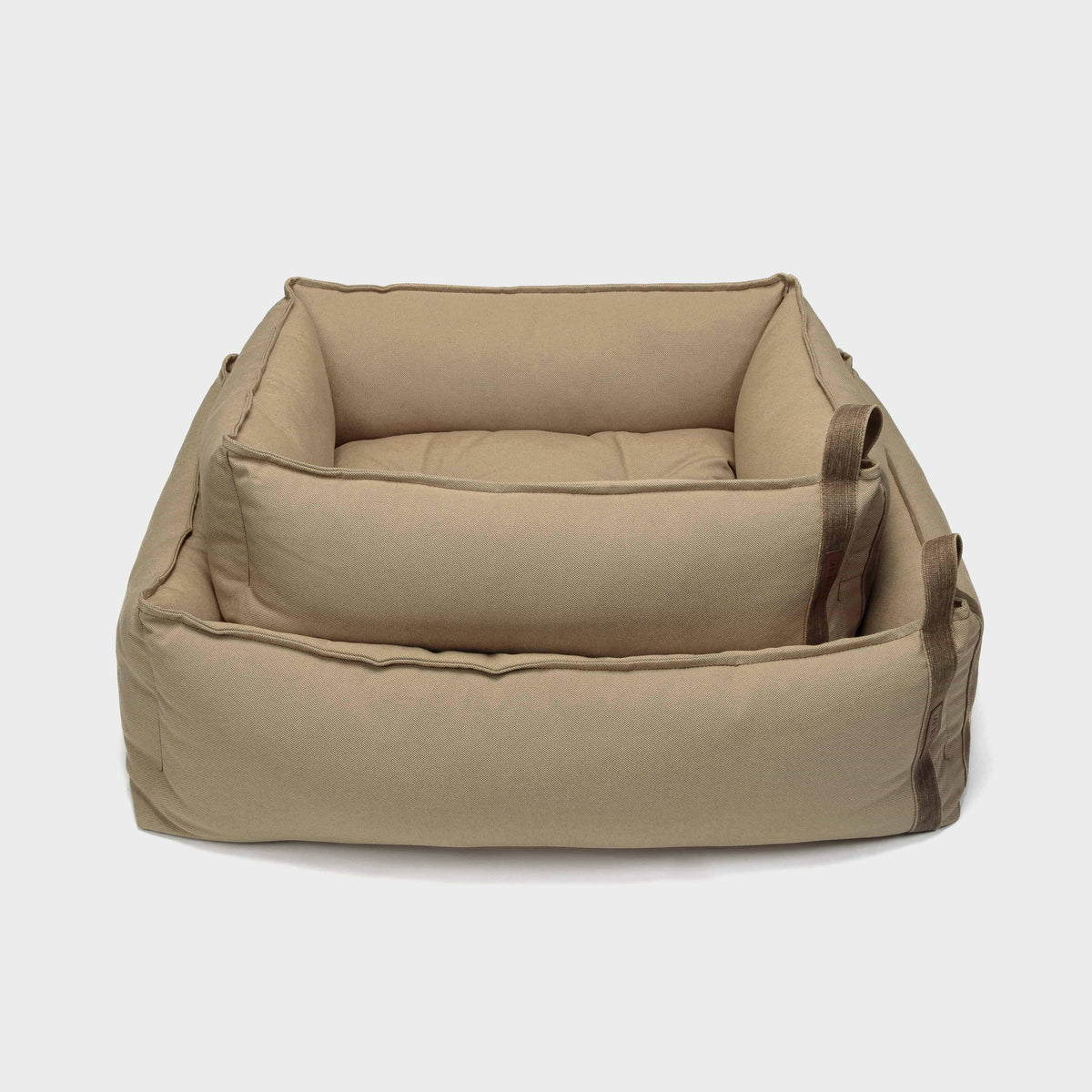
LTTL Snoozy bed is designed for puppies and small dogs. The entrance can be raised and lowered as the dog grows, and the bottom is sturdy. More beds are in the dog beds collection, and in the article Does My Pet Need a Bed? we go over why a fixed resting place matters.
In short
The first months require patience, but what you put in during them pays off for many years. Keep training sessions short and positive, redirect chewing behavior to appropriate toys, give puppy food in several small meals and allow the puppy to sleep enough. Contact a veterinarian regarding vaccinations and health. If you need advice about equipment, you're welcome to visit us at Nýbýlavegur 10 or browse the selection at mori.is.