
How do I choose dry food for my dog? Reading the ingredient list
Good dry food for your dog is food that suits their age, size and activity level, is labeled as complete food and clearly names its protein source at the top of the ingredient list. When you know how the ingredient list is structured, it becomes much easier to compare different types. Here we go over the main things on the bag and how you use them.
If you want a more general introduction to dry food, we recommend the article Dry food for your dog. Here we focus on the packaging itself.
Start with the dog, not the bag
Before you read a single ingredient, answer a few questions about your dog:
- Life stage: Puppies need food intended for puppies, adult dogs food for adults, and senior dogs can benefit from lighter food.
- Size: Small dogs handle smaller kibble better and large dogs larger kibble.
- Activity and body condition: A dog that exercises a lot needs more energy than a dog that easily gains weight.
- Digestion and tolerance: Is the dog sensitive in the stomach or has it shown signs of not tolerating certain ingredients?
These answers narrow down the choice right away. For example, IMBY Puppy is intended for puppies, IMBY Adult Mini for adult small dogs, and SYMPLY Light / Senior for dogs that are seven years and older or overweight.
Complete food or complementary food?
The packaging should state whether it is complete food or complementary food. Complete food should meet all of the dog's nutritional needs on its own when given in the recommended amount. Complementary food, like treats and many flavor enhancers, is intended as a supplement to the main food. If you plan to use the dry food as your dog's main diet, make sure it is complete food.
The order of ingredients says a lot
Ingredients are listed by weight, from most to least. The first five ingredients therefore give a good picture of what the food is mostly made of.
Named protein source
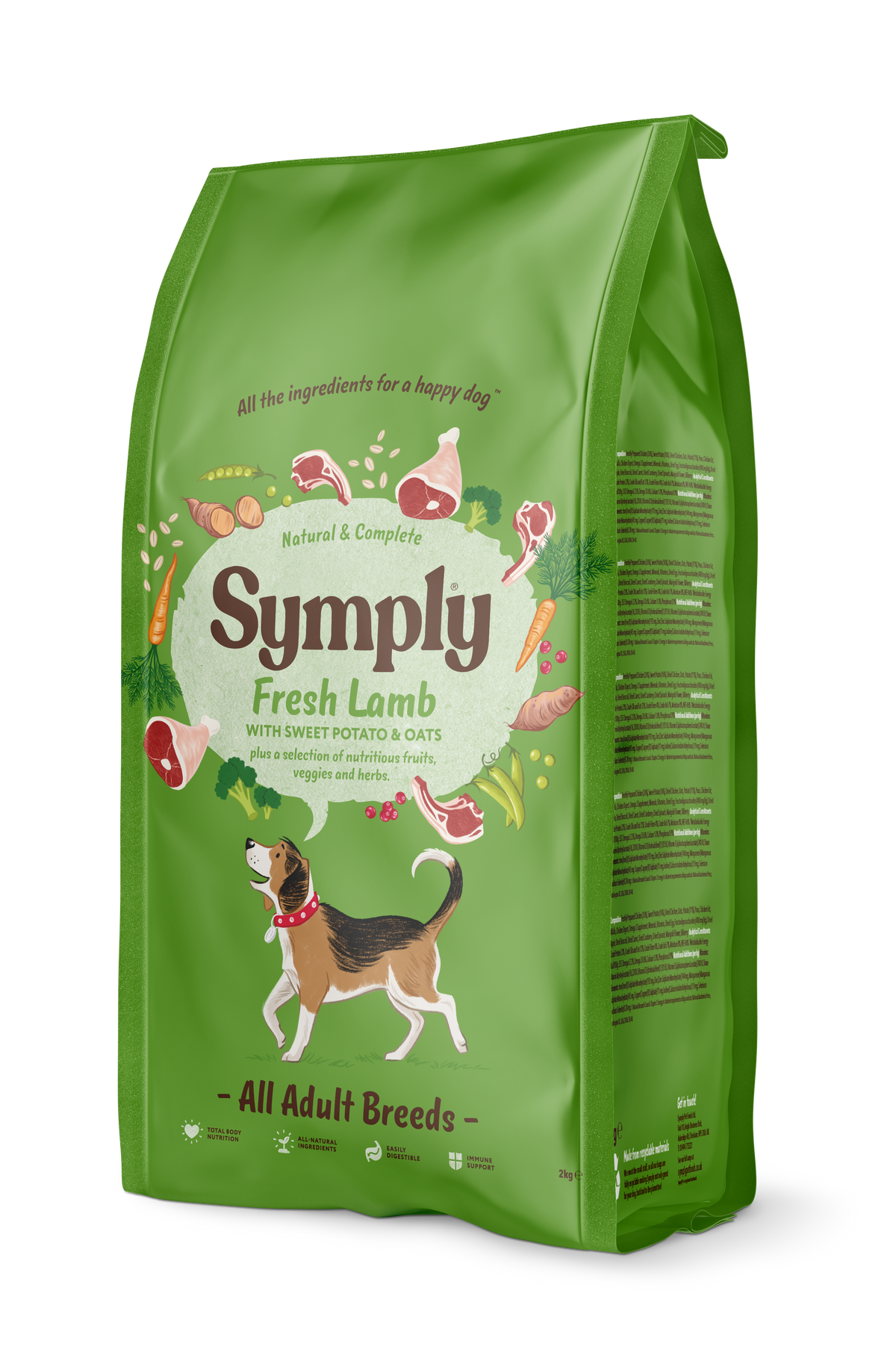
Look for a clear name like "lamb", "salmon" or "chicken" rather than vague wording like "meat and animal derivatives". A clear name tells you where the protein comes from, which is especially important if your dog doesn't tolerate certain types. SYMPLY Adult Lamb is for example made from fresh lamb and SYMPLY Adult Salmon from fresh salmon.
Fresh meat or dried?
Fresh meat is largely water. It therefore weighs heavy when added to the mix but lightens significantly when the food is dried. Dried meat or meat meal, on the other hand, contains little water and more protein by weight. Neither is wrong, but it's good to keep this in mind when fresh meat tops the list. Also check what comes next.
Same ingredient under many names
Sometimes the same ingredient is split into several items, for example different types of rice or beans. Each item individually then lands lower on the list, but if they are added together they could be the largest part of the food. This is not necessarily a sign of poor food, but it helps to read the list as a whole.
Nutritional value: crude protein, crude fat and crude ash
Below the ingredient list there is usually a section with analysis of nutrients. The words may seem unfamiliar but they are simple once you know them.
| On the packaging | What it means |
|---|---|
| Crude protein | Total amount of protein in the food. |
| Crude fat | Fat content, the main energy source. Active dogs often need more, overweight dogs less. |
| Crude fiber | Fiber that affects digestion and satiety. |
| Crude ash | Mineral content, such as calcium and phosphorus. Not additives, but a measurement. |
| Moisture | Water content. In dry food it is usually low. |
Compare based on dry matter
If you want to compare dry food and wet food, or two types of food with different moisture levels, it's good to calculate the nutritional value based on dry matter. Subtract the moisture from 100 and then divide the protein percentage by the result. Dry food with 25% crude protein and 10% moisture therefore contains about 28% protein based on dry matter (25 ÷ 90). This way you see the real difference instead of letting the water confuse the picture.
Additives and other things worth checking
- Vitamins and minerals are a natural part of complete food and should ensure that nutrition is adequate.
- Antioxidants are used to keep the food fresh. Many manufacturers use natural substances like tocopherol (vitamin E).
- Vegetables and fruits add fiber and variety. For example, some IMBY products include pumpkin, sweet potatoes, broccoli, and blueberries in the mix.
- Grain-free is not automatically better. It mainly matters if your dog doesn't tolerate grains, and then it's best to consult a veterinarian.
Other protein sources: insects and plants
Now there are also foods with unconventional protein sources. Several IMBY products contain insect protein, and IMBY Gastrointestinal is a grain-free food with insect protein and probiotic nutrition, specially designed for dogs with sensitive digestion and allergies. If your dog has digestive or skin symptoms, talk to a veterinarian before switching, and you can read more in the article Does your dog have food intolerance or allergies?
For those who want food without animal protein, IMBY Dry Food from Plant Protein is available. It's wise to consult a veterinarian before switching to vegan food, especially for puppies and older dogs. You can also find it in the collection Vegan dog food.
Once you've chosen: switching, portions, and storage
- Switch gradually. Mix the new food with the old over about a week to ten days and increase the ratio steadily.
- Use the feeding chart as a starting point. Then monitor body condition and weight and adjust the amount. Remember that treats and flavor enhancers count too.
- Store the food properly. Keep it in its original packaging, well sealed, in a dry and cool place.
Not sure if your dog will like the taste? Check out the collection Taste packs for dogs before buying a large bag. You'll find the dry food selection in the collection Dry food for dogs, and if you want to learn more about the brands, the collections Symply food and IMBY Dry Food are a good place to start, along with the articles Why should we switch to Symply food? and Why should we choose food from IMBY instead?
In short: first choose based on your dog's age, size, and activity level, make sure the food is complete, read the first ingredients, and compare nutritional values based on dry matter. Your dog will then give you the best answers with their energy, coat, and body condition. If something doesn't seem right, the veterinarian is the right person to consult. You're welcome to visit us at Nýbýlavegur 10 in Kópavogur, or order at mori.is and have the food delivered nationwide or pick it up in store.