
Dry food for cats: what matters in the ingredients?
Good dry food for cats has a named animal protein as the main ingredient and is labeled as complete food. It also needs to suit the cat's age and lifestyle. To evaluate the food, you need to read two things together: the ingredient list and the nutritional analysis. And don't forget water, because a cat eating dry food needs to drink more than a cat on wet food. Here we go through this step by step.
Why cats need special food
Cats are carnivores in the strict sense. They get their nutrition best from animal products and need certain substances that they don't produce themselves in sufficient amounts. These include the amino acid taurine, vitamin A in active form, and arachidonic acid. That's why dog food isn't suitable for cats, and that's why it matters that cat food is complete food. This means the food alone should meet the cat's nutritional needs. Supplementary food and treats don't do that.
How to read the ingredient list
Ingredients are listed by their weight in the recipe, heaviest first. The first three to five ingredients therefore tell you the most about the food.
- Named protein source at the top. "Chicken", "rabbit" or "salmon" is clearer than vague wording like "meat and animal derivatives". Then you know what the cat is eating, and it's useful if they don't tolerate a specific ingredient.
- Fresh or dried meat. Fresh meat is largely water, and that water mostly disappears during production. Dried meat or meat meal, however, is already without water and therefore provides more protein relative to weight. Neither is wrong, but keep this in mind when comparing foods.
- Carbohydrates and fillers. Cats need little carbohydrate. If grains, potatoes or legumes occupy many of the top spots, the meat is probably a smaller part of the food than the packaging suggests. Grain-free food isn't automatically better though, because the overall composition matters most.
- Additives. Cats don't need artificial colorants or added sugar. Natural preservatives, like tocopherol (vitamin E), are common and a natural way to keep the fat fresh.
What does the nutritional analysis say?
On the packaging there's also a nutritional analysis showing the proportion of main nutrients. Here's how to read it:
| Item | What it tells you |
|---|---|
| Protein | It's common for quality dry food for cats to have around or over 30% protein. Keep in mind that the source of the protein also matters, not just the number. |
| Fat | Fat is an important energy source. Higher fat content means more energy-rich food, which matters for cats that move little. |
| Crude fiber | Fiber can support digestion. In food for indoor cats, the proportion is sometimes higher. |
| Crude ash | Total mineral content. If the cat has a history of urinary tract problems, you should discuss food choice with a vet. |
| Moisture | In dry food, moisture is usually around or under 10%, which is far below the moisture in prey or wet food. |
Carbohydrates are rarely listed, but you can estimate them. Subtract protein, fat, fiber, ash and moisture from 100. What remains is a rough indication of the carbohydrates in the food.
Is the food right for your cat?
Age
Kittens need more energy-rich food and more protein while they're growing, which is why there's special kitten food. Adult cats get food for adults. For older cats, it's good to monitor body condition and appetite and consult a vet if anything changes.
Indoor cat or outdoor cat
Neutered cats and cats that are mostly indoors often burn less energy. Then it matters more to weigh the portion than to necessarily switch type.
Sensitive stomach or intolerance
If the cat often has stomach issues, has itching or a poor coat, it's advisable to contact a vet before you try different foods. Food with few and clear ingredients can make it easier to find what works.
Examples from Móri's selection
In the collection Dry food for cats you'll find different options. A few examples:
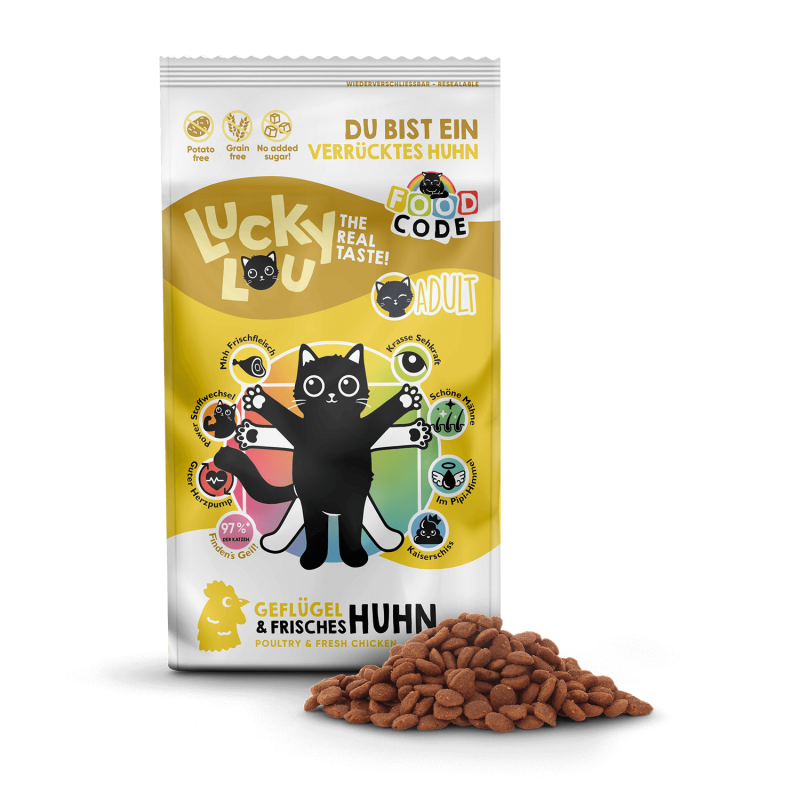
- Food Code Adult dry food with chicken is made from fresh meat, without gluten, grain, added sugar and preservatives. It also contains 0.5% catnip.
- Food Code Mono with rabbit meat is made from fresh rabbit meat and suits those who want to try rabbit. It's likewise without gluten, grain, added sugar and preservatives. Both types are in the collection Lucky Lou dry food.
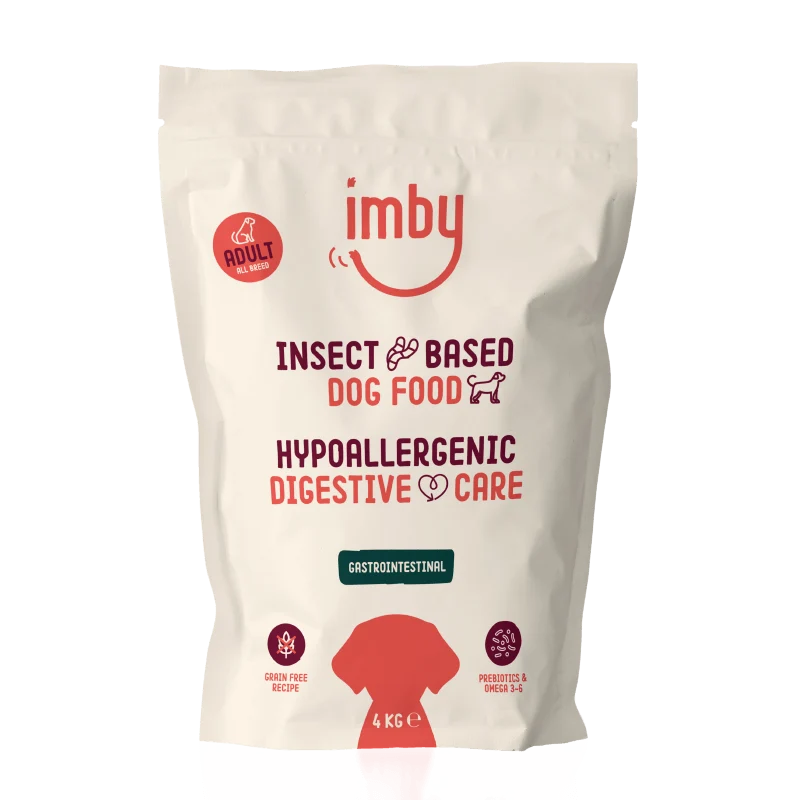
- IMBY dry food from insect protein is produced from sustainable products. There, insect protein is mixed with pumpkin, sweet potatoes, broccoli, spinach and blueberries. It suits cat owners who want a different protein source than conventional meat. More about the brand in IMBY dry food and in the article Why should we rather choose food from IMBY?
Don't forget the water
Cats generally have a weak sense of thirst, and with dry food they get almost no liquid from the food. Always have fresh water available, preferably in several places and not right next to the food bowl. Many cats drink better from running water. The HYDR water fountain is designed to encourage the cat to drink more pure water. It's recommended to change the filters in HYDR every four to five weeks. More fountains can be found in the collection Water fountains, and more tips in the article How do I get my cat to drink more water?
Another way is to mix wet food with the dry food. Purrrr N° 107 with kangaroo for example has a single protein source and over 98% meat, fish, offal and broth. The pros and cons of each food are discussed in the article Dry food or wet food for cats?, and the selection is in the collection Wet food for cats.
Portions, transitions and storage
- Weigh the food. Measuring cups are inaccurate. Start with the recommended portion on the package and adjust it according to your cat's body condition. You should be able to feel the ribs under a thin layer of fat.
- Switch food gradually. Mix the new food gradually with the old one over about a week to ten days.
- Store the food properly. Keep it in the original bag, well sealed, in a dry and cool place. The fat in the food can go rancid if the bag is left open.
- Factor in treats. Treats and other goodies add energy, so reduce the daily portion slightly if your cat gets a lot of extras.
In short: look for named animal protein at the top of the ingredient list and make sure the food is complete. Compare the nutritional analysis and choose according to your cat's age and lifestyle. Then make sure they drink enough. If your cat has special health needs, the vet is the best advisor. You can also stop by at Nýbýlavegur 10 or check out the selection at mori.is and get delivery nationwide.