





How do I trim my dog's and cat's nails? Step by step
Most dogs need their nails trimmed every 3–6 weeks, and indoor cats often every 2–4 weeks. You only clip the very tip, in front of the quick, which is the living part of the nail with blood vessels and nerves. It's best to go slowly, take a little at a time, and reward your pet well. Here we go over how to tell when it's time, what tools are suitable, and how to do this step by step.
Why does nail length matter?
Nails that are too long change how your pet steps down. The dog shifts weight back onto the pads and the toes splay. Over time, this can cause discomfort in the toes and joints. Long nails also tend to get caught in carpets and blankets and can tear. In cats, the nails can curve and grow into the pad, especially in older cats that scratch less than before.
In winter, nails often wear down less. Walks become shorter, walking is on soft snow rather than pavement, and pets are indoors more. Autumn and winter are therefore a good time to establish nail trimming as a regular routine.
How do you know it's time to trim the nails?
- The sound:If there's a clicking sound on the floor when your dog walks, the nails are too long.
- Standing still:When your dog stands still, the nails shouldn't touch the floor.
- The cat gets stuck:If your cat gets stuck on the sofa, carpet, or your clothes, it's a good idea to check the nails.
- The dewclaw:The dewclaw on the inside of the leg, often called the wolf claw, doesn't touch the ground and therefore doesn't wear down. It always needs to be trimmed separately.
Clippers or nail file?
| Nail Clippers | Nail File | |
|---|---|---|
| Speed | Quick, one clip per nail | Takes a bit longer |
| Precision | Easier to take too much at once | Takes a little at a time with less risk of hitting the quick |
| Finish | The edge can be sharp | The edge becomes smooth and rounded |
| Works well for | Cats and calm pets with light-colored nails | Dogs with dark or thick nails and pets that get used to the sound |
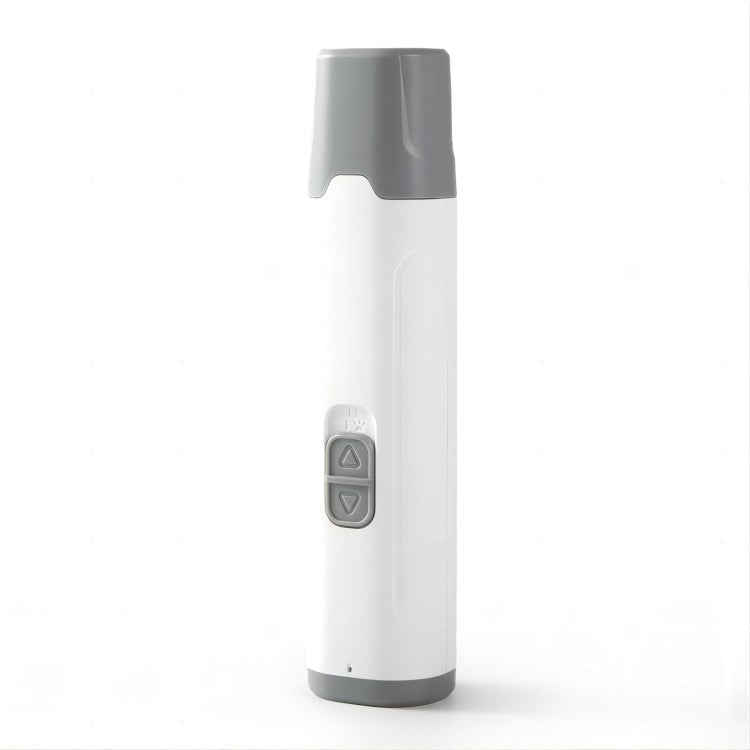
Many use both: clip the tip first, then file the edge smooth.Silent nail file with lightis made for both dogs and cats. More tools can be found in ourgrooming products.
Step by step: how to trim the nails
- Get them used to it first.Touch the paws daily for a few days without clipping anything. Let your pet sniff the tool and reward them. If you're using a file, it's good to turn it on near your pet so they get used to the sound.
- Choose a calm moment.After a walk or meal, when your pet is tired and content, usually works better. Sit on the floor where the light is good.
- Find the quick.On light-colored nails, the pink part is clearly visible and you clip a few millimeters in front of it. On dark nails, you should take very thin slices. When a gray or dark spot starts to appear in the center of the cut surface, you're close to the quick and should stop.
- Hold correctly.Hold the paw firmly but gently. With cats, you gently press on the pad from above and below so the nail comes out.
- Take a little at a time.Clip or file across the nail, just the tip. It's better to repeat after a week than to take too much.
- Reward often.One or two nails at a time is good progress in the beginning. Stop before your pet becomes impatient.
For rewards, something your pet appreciates works well, for examplelamb pufffor dogs. More ideas can be found indog treatsandcat treats.
If you cut into the quick
This happens to most people at some point. It bleeds and your pet reacts, but usually this isn't serious. Hold a clean cloth firmly against the nail for a few minutes. Styptic powder or a little potato flour can help stop the bleeding. If it bleeds for a long time, the nail is cracked, or your pet is limping, you should contact a vet.
Specifically about cats
Cats maintain their nails themselves by scratching. The outer layers of the nail come off and a new layer is revealed underneath. A good scratching post can therefore save you trimming and protect your furniture. Cats often like to stretch to their full length when they scratch, so the post needs to be stable and tall enough.The OASIS scratching posthas a ball on top that the cat can play with. For those who want a tower with more options, there areTotemandLoop Tower great options. The entire selection is in the collection cat scratchers and scratching posts. In our previous article, we discuss in more detail how to prevent scratched furniture.
Outdoor cats need trimming less often than indoor cats. Older cats, however, often need more help as their claws can become thick and curve into the paw pad. Check your older cat's paws regularly and consult a vet if you see redness, swelling, or a claw growing into the pad.
When the animal is stressed
Some animals have bad experiences with trimming and become anxious as soon as they see the tools. Then start again at step one and take your time. It can also help to have two people: one holds the animal calmly and gives treats while the other clips. Some owners give dogs that are sensitive to grooming treat bites like IMBY Calming, which are supposed to have calming properties. If the dog is very scared or shows aggression, it's best to talk to a vet about the next steps, as they can also assist with the trimming itself.
While you have the paws in your hands, it's good to check the paw pads too. In winter, salt and frost can dry them out, and then paw balm can come in handy.
In short
If the claws click on the floor, it's time to trim them. Take a little at a time, stay away from the quick, and make trimming a calm moment with good rewards. A scratching post helps the cat maintain their claws between trimmings. If anything seems concerning about the claws or paw pads, the vet is the right person to contact. You can find the tools at our store at Nýbýlavegur 10 in Kópavogur and at mori.is.